


Do you remember the time when Google Maps was just a digital version of old paper maps? It simply told you the fastest way from A to B. Well, that era is over. The most widely used mapping application in the world is ceasing to be a simple navigation tool to become your personal travel assistant, capable of predicting what you need before you even know it.
The engine behind this transformation is none other than Gemini, Google's Artificial Intelligence.
The four features you will see appear in your next trips are not just "improvements," but a qualitative leap. They seek to solve problems that traditional GPS never could: range anxiety, information overload, loss of time in planning, and, fundamentally, the need to feel that you have control over your identity while interacting with the community.
The 4 changes you will notice in Google Maps during your next trips
The new functions powered by artificial intelligence seek to facilitate activity planning, improve the driving experience, and offer greater control over privacy in reviews.
Four functions with artificial intelligence that Google Maps will integrate. Google Maps incorporates four new functions powered by artificial intelligence to improve planning, place discovery, and user privacy. The novelties, which have already begun to roll out progressively in different regions, use Gemini as the main engine.
1. AI-Generated Tips in Place Listings: The Perfect Summary
When you look for a new restaurant, hotel, or cultural center, the listing is often saturated with hundreds or thousands of reviews. Who has time to read them all?
The new AI-Generated Tips feature solves this information overload problem.
- Gemini’s Superpower: Using the power of Gemini, Google Maps reads, analyzes, and synthesizes thousands of public opinions, filtering out the most relevant points. The result is a small informational card with the "executive summary" of the location.
- How does it help you? Instead of reading 50 reviews about a museum, the AI card might tell you: “80% of users recommend going in the morning to avoid lines” or “Parking is limited, consider using the subway”. It's like having a friend who already read everything give you the key advice before leaving home.
- Value for the User: This quick information facilitates planning and reduces anxiety. You no longer have to guess whether a place is wheelchair accessible or if they have vegan options; the AI will tell you at a glance. This feature begins its rollout in the United States, but it is the one most likely to expand globally.
AI-generated recommendation cards.
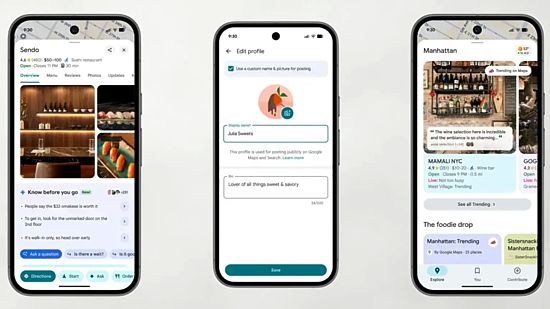
The platform will include informational cards with quick recommendations developed from the analysis of public reviews and data available on the internet. These cards—such as instructions for booking, accessibility details, parking facilities, or useful information before the visit—will appear within business listings like restaurants, hotels, or cultural centers. The function, powered by Gemini, is initially launching in the United States for the mobile versions of Android and iOS.
2. A Trends Section in the "Explore" Tab: Your Local Guide in Real Time
Until now, the "Explore" tab in Google Maps showed you popular places or predefined categories. Now, the section becomes dynamic and alive, reflecting what is actually happening in your city or destination.
- What's New? This section will integrate lists of popular sites in real time. Imagine a new coffee shop opens and becomes a local trend in just 24 hours; Google Maps will detect it and show it to you. This includes everything from newly opened venues to activities recommended by local influencers or travel guides from partners like Lonely Planet.
- The Mental Shift: We move from a static directory to constant content curation. Google helps you discover hidden gems and avoid always falling into the same five usual places. It is the perfect solution for the "curious beginner" traveler looking for authentic experiences without having to browse dozens of blogs.
- Reach: This is one of the fastest-rolling features and will be globally activated in the Explore tab, giving you a pulse of the local atmosphere anywhere in the world.
The Explore section will integrate a dynamic list with sites that are popular in real time, from newly opened venues to activities recommended by local creators or partners like Lonely Planet or OpenTable. The objective is for users to discover places without relying on multiple applications. This section, which will be activated directly from the server, will have a global rollout during this month.
3. Predictive Availability for Electric Vehicle Chargers: Goodbye to Range Anxiety
For the growing number of electric vehicle (EV) drivers, there is a constant fear: running out of battery far from a station or arriving at a station only to find all chargers occupied. This is known as "range anxiety."
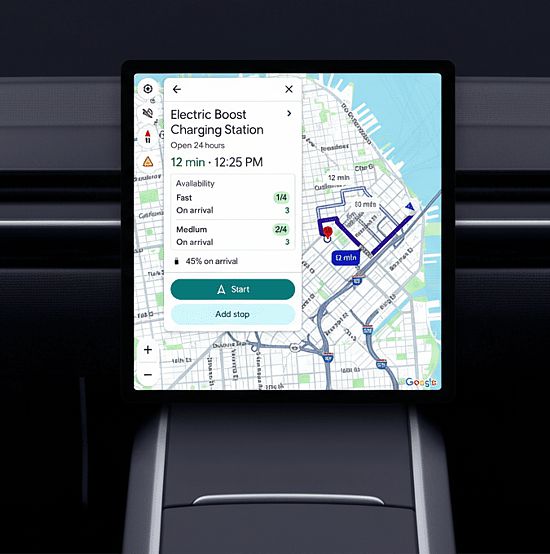
- The Predictive Solution: Google Maps will add a system that estimates the probable availability of chargers when you arrive at a station. It won't just tell you if there are chargers, but how many chances you have of finding a free one.
- How does the AI work? The feature combines the analysis of historical data (station usage patterns on similar days and times) with real-time updates received by the system. Thus, the map can tell you: "There is an 85% probability that you will find a free charger in 15 minutes."
- Impact on Driving: This feature is an immense relief for long EV trips. By allowing you to make informed decisions about where and when to charge, it optimizes your route and avoids unnecessary waits or frustrating detours. It is planned for Android Auto and vehicles with integrated Google, underlining its importance in the future of driving.
Google Maps will show you if electric vehicle charging stations are full.</p> <p>For electric vehicle drivers, Google Maps will add a system that estimates the probable availability of chargers when the user arrives at a station. This function combines historical data and real-time updates to avoid unnecessary waits. The feature is scheduled for launch on Android Auto and in cars with integrated Google, covering hundreds of thousands of stations internationally.

4. Reviews with Personalized Nickname and Photo: A New Balance between Community and Anonymity
Online privacy is a growing concern, especially when leaving reviews in physical locations linked to your real name. Many people avoid giving their opinion so as not to expose their identity.
- Control, in your hands: Google Maps will allow users to choose a nickname and an alternative photo (an avatar, for example) specifically to sign their public ratings.
- What does this mean? Your real Google account remains linked internally for security and moderation purposes, but your full name ceases to be visible to the public in your reviews. This encourages more people to share their honest opinions without compromising their personal identity.
- Benefit for the Community: By increasing the sense of security and privacy, more users are expected to participate. More participation means more reviews, and more reviews mean higher quality and more accurate data for all Google Maps users, improving the map's utility for everyone. This privacy adjustment has a global rollout on all platforms.
With the intention of increasing participation in reviews without compromising privacy, users will be able to choose a nickname and an alternative photo specifically to sign their ratings on Google Maps. This identity does not replace the real account, which remains internally linked, but prevents exposing the full name to the public. This adjustment will arrive globally on Android, iOS, and the web version in the coming weeks.
The Future of Navigation
These four changes demonstrate Google Maps' ambition to go beyond simple GPS. The platform is evolving into a predictive and discovery tool that uses Gemini AI to process the complexity of the real world (massive reviews, traffic patterns, charger availability) and present you with only the information you need at the exact moment.
The era of passive navigation is over. With these improvements, your phone not only tells you where to go, but actively helps you plan, enjoy, and move through the world with greater confidence and much less stress. It is a giant step to adapt the most advanced technology to the most common context of all: the experience of traveling and discovering.









 We turn your ideas into reality, creating unique digital experiences. With more than 15 years of knowledge and experience, we design and develop custom websites. We build brands and help them achieve success. We offer a complete service, from design and content creation to social media integration and administration.


