


In the world of business and technology, the only constant is change. The companies and professionals who succeed are not necessarily the smartest from the start, but the most adaptable. This capacity for adaptation is not just a soft skill; it is a biological function that we can train. Its name is: Neuroplasticity.
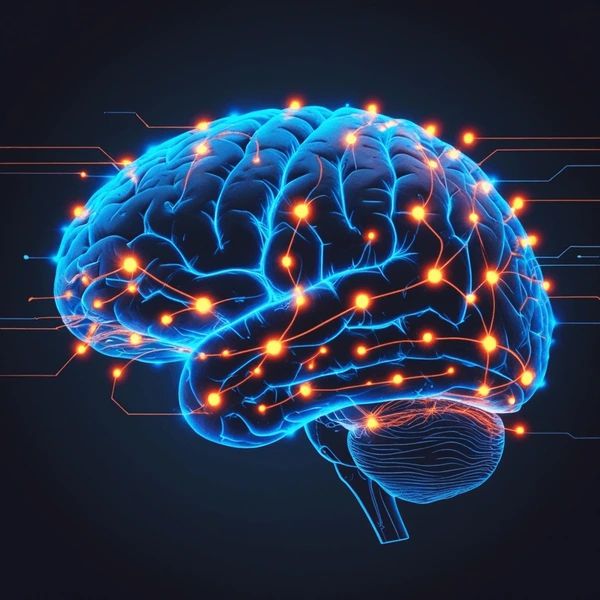
Not long ago, science believed that the adult brain was a fixed structure. It was thought that, upon reaching a certain age, our neurons and connections were set in stone, and that we couldn't learn complex new skills with the same ease as children. Today, neuroscience has gloriously debunked this idea. We know that the brain is a wonderfully flexible organ, capable of reconfiguring itself in response to experience, learning, and, crucially, the way we think. This is neuroplasticity.
If your brain can change, then you can change. And if you can change, your business, your career, and your potential for innovation are, literally, unlimited.
What is Neuroplasticity Really?
Neuroplasticity is the capacity of the nervous system to change its structure and functioning throughout life in response to the diversity of the environment. It's not just about neurons growing; it's about two fundamental processes:
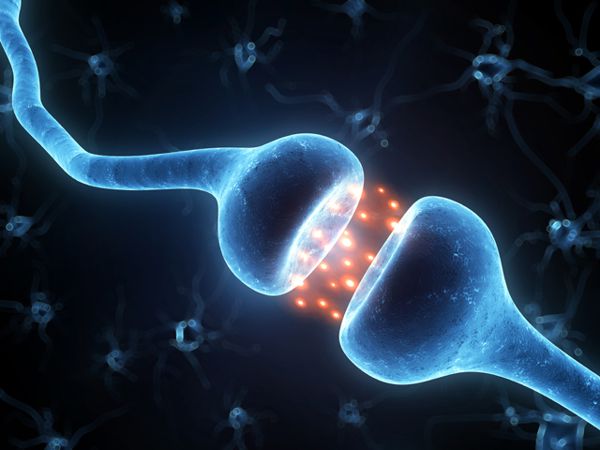
- Synaptic Pruning: Eliminating neuronal connections that are no longer used (making space).
- Synaptic Creation: Strengthening and creating new neuronal connections (learning).
When you learn a new language, acquire a new programming skill, or even change a bad habit, you are activating neuroplasticity. You are literally sculpting your brain.
This concept is a "superpower" because it removes the biological excuse of "I'm too old to learn this" or "I'm just not good at this." If the structure of your brain can be modified by experience, the limit of what you can achieve is, to a large extent, the intensity and quality of the experiences you seek.
The Direct Link to the Growth Mindset
This is where neuroscience intersects with personal and business success. Neuroplasticity provides the biological foundation, while the Growth Mindset, popularized by psychologist Carol Dweck, is the mental tool to activate it.
Fixed Mindset
People with a fixed mindset believe that their basic qualities (intelligence, talent, skills) are immutable traits. Success is perceived as confirmation of that innate intelligence, and failure is proof that they are not good enough. This translates to:
- Avoiding challenges.
- Giving up easily in the face of obstacles.
- Ignoring constructive criticism (viewing it as a personal attack).
Growth Mindset
People with a growth mindset understand that their abilities can be developed through dedication and hard work. They firmly believe that effort is what activates and strengthens neuronal connections (neuroplasticity). This translates to:
- Accepting challenges as opportunities to grow.
- Viewing failure as a source of information and learning.
- Actively seeking criticism, knowing it is vital for improvement.
The Fixed Mindset tells you: "I'm no good at programming." The Growth Mindset tells you: "I'm not good at programming yet... but my brain can learn!" This little word —"Yet"— is the engine that ignites neuroplasticity.
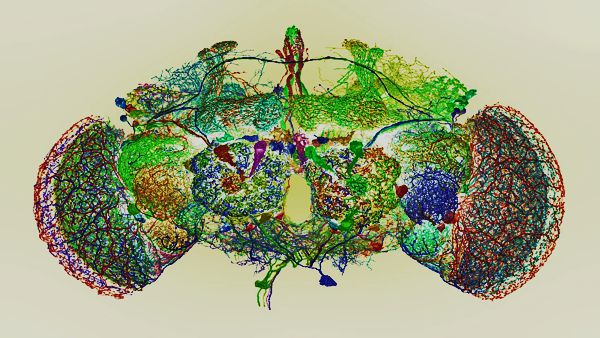
In the image the most complete map of Neural Connections
How to Apply Neuroplasticity in Innovation and Business
Continuous innovation is the survival of any business in the digital age. Neuroplasticity, viewed from an organizational perspective, is a company's capacity to reconfigure its thinking and processes.
1. Adopt the Culture of "Fast and Cheap Failure"
In the brain, pruning useless connections is as important as creating new ones. In business, this means that failed projects or ideas should not be punished; they should be quickly analyzed and eliminated. If an experiment doesn't work, the team should celebrate it as a lesson learned (a useless connection pruned) and immediately move on to the next hypothesis.
2. Train "Skill Transfer"
Your brain does not store knowledge in watertight compartments. Neuroplasticity causes skills to transfer. Someone who is good at playing chess may be a better business strategist. Someone who learns to play an instrument improves their concentration ability. Encourage interdisciplinary learning in your teams. Why not a course on design problem-solving for the marketing team?
3. The Daily Dose of Novelty (Constant Stimulation)
Neuroplasticity is activated by novelty and difficulty. A brain that always does the same thing becomes rigid. For a company, this means:
- Role Rotation: Allow employees to spend a month in another department to understand the challenges from another perspective.
- Unexpected Challenges: Introduce hackathons or "crazy days" where teams must solve a problem outside their field in 24 hours.
- Learning in Public: Encourage mentoring and teaching. Explaining a concept to others consolidates the neuronal connection in the teacher's brain.
Personal Strategies to "Wire" Your Brain for Success
The best investment you can make is in the flexibility of your own brain. Here are three neuroscience-backed ways to activate your neuroplasticity and develop an unshakeable Growth Mindset:
1. The Power of Metacognitive Reflection
Metacognition is "thinking about your own thinking." When you make a mistake, instead of saying, "I'm an idiot!", ask yourself:
- Fixed Mindset: What did I fail at? (Seeks blame).
- Growth Mindset: What steps should I take differently next time to achieve a better result? (Seeks strategy).
This simple reorientation of internal dialogue forces your brain to shift from "judgment" mode to "problem-solving" mode, building a new neural pathway.
2. Deep Learning
It's not enough to read about something; you have to practice it. Neuroplasticity is consolidated when information is repeated with effort. If you are learning coding, don't just watch videos; write code, make mistakes, and correct them. The error correction process is the strongest signal you give your brain to strengthen the synapses related to that skill.
3. Embrace the Optimal Challenge
Neuroscientists call it the "Learning Zone." It is the point of difficulty that is just above your current level, but not so high as to cause total panic. If the task is too easy, your brain doesn't change. If it is too difficult, you become blocked. Look for activities that force you to exert effort and keep you in a state of Deep Concentration (Flow). This state is your brain's gym.
The Future Belongs to the Flexible
Neuroplasticity is not a theory; it is a biological fact. It is the scientific confirmation that, no matter your age, experience, or past failures, you have the incredible capacity to rewrite your own story.
Adopting the Growth Mindset and actively applying it in your life and work environment is the key to unleashing this superpower. By understanding that effort is not a sign of incompetence, but the tool that restructures your brain, you position yourself and your business for success that is not static, but continuous and adaptable.
In this way, the future will not be dominated by those with the largest amount of information, but by those with the most flexible brains willing to change.







 We turn your ideas into reality, creating unique digital experiences. With more than 15 years of knowledge and experience, we design and develop custom websites. We build brands and help them achieve success. We offer a complete service, from design and content creation to social media integration and administration.


