


Artificial intelligence is transforming work at a speed that few people imagined just a few years ago. Today it is possible to write texts, generate reports, analyze data, program code, or design presentations in minutes thanks to AI tools accessible to any professional. For entrepreneurs, students, and knowledge workers, this represents a huge productivity improvement. Tasks that once took hours can now be completed in minutes. However, behind this silent revolution a less visible phenomenon is emerging: the possible erosion of cognitive skills.
The problem is not that artificial intelligence makes work easier. The problem is that, if used without judgment, it can gradually reduce the ability to think independently. AI can increase efficiency, but it can also weaken fundamental mental skills if it becomes a constant substitute for personal reasoning.
We are entering a stage where the real competitive advantage will not be using artificial intelligence, but knowing how to use it without losing intellectual capacity.
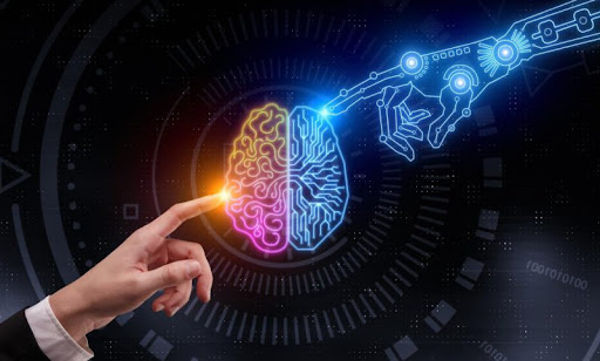
What Digital Cognitive Erosion Is
Digital cognitive erosion is a phenomenon that describes the progressive reduction of mental abilities due to excessive dependence on technological tools to think, remember, or make decisions.
It is not a completely new concept. For years there has been debate about whether GPS reduces our spatial memory or whether search engines reduce the need to remember information. However, artificial intelligence introduces a much deeper change because it does not only store information: it also thinks, organizes, and decides.
When a person constantly delegates complex mental tasks to an automatic tool, the brain reduces the effort required to perform them. Over time, that lack of practice can translate into a real decline in cognitive skills.
This is not about artificial intelligence being harmful by itself. The risk appears when it is used as a permanent substitute for thinking.
Why AI Can Weaken Mental Skills
The human brain operates under a simple principle: abilities that are not used tend to weaken. This principle applies to physical skills, but also to mental skills such as analysis, memory, and critical reasoning.
When a professional uses artificial intelligence to solve problems constantly without reviewing or questioning the results, the cognitive effort required to understand what is happening is reduced.
AI can generate complete texts without the user having to structure ideas. It can analyze data without the user having to interpret patterns. It can suggest decisions without the user having to evaluate alternatives.
This process reduces the mental friction that normally forces deeper thinking.
The paradox is clear: the more efficient work becomes, the less mental training it requires.
The Illusion of Competence
One of the most dangerous effects of excessive use of artificial intelligence is the illusion of competence.
A person can produce complex documents, detailed reports, or professional presentations with the help of AI without having truly developed the skills required to do it from scratch.
From the outside, it may appear that the professional is more competent than ever. However, if the tool disappears, many of those capabilities vanish immediately.
This creates an important difference between assisted performance and real knowledge.
A worker may appear highly productive without having improved their capacity for analysis, synthesis, or communication.
The result is a false sense of mastery that can become dangerous in situations where artificial intelligence is not available or where its answers are incorrect.
Automation of Everyday Thinking
Artificial intelligence is not only automating technical tasks. It is also automating everyday mental processes.
Today it is possible to ask AI to:
- Summarize long articles
- Explain complex concepts
- Generate business ideas
- Write emails
- Plan projects
- Make basic decisions
Each of these tasks involves mental processes that traditionally trained important cognitive skills.
When those tasks disappear, part of the daily mental training disappears as well.
Most people do not notice this change because the immediate benefit is very clear: saving time.
The cognitive cost appears slowly and usually goes unnoticed.
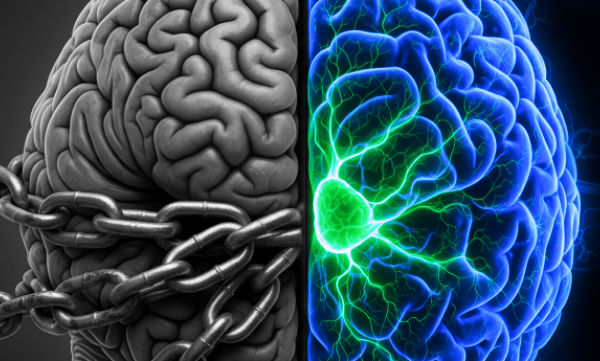
The Risk for Young Professionals
The impact may be especially significant for professionals who are just starting their careers.
Early career stages are usually when fundamental skills such as analysis, communication, and problem-solving are developed.
If these stages happen with total dependence on artificial intelligence, some skills may never fully develop.
An experienced professional who adopts AI already has a solid knowledge base. A professional who starts with AI may develop a weaker foundation if they never face problems without assistance.
This could create a new workplace gap between those who use AI as a tool and those who depend completely on it.
The Difference Between Using AI and Depending on AI
Not all use of artificial intelligence produces cognitive erosion. The key difference lies between using the tool as support and using it as a substitute.
Using AI as support means generating initial ideas, exploring options, or accelerating repetitive tasks while the user maintains control over the process.
Depending on AI means delegating the entire structure of thinking and accepting results without critical analysis.
In the first case, the tool amplifies human capabilities. In the second case, it can replace them.
The problem is not technological. It is behavioral.
How to Avoid Cognitive Erosion
Avoiding cognitive erosion does not mean stopping the use of artificial intelligence. It means using it consciously.
Some simple practices can make a significant difference.
- Think first and consult later
- Write your own ideas before asking AI for help
- Critically review generated results
- Modify and improve generated content
- Solve some problems without assistance
These practices keep active the mental effort that strengthens cognitive skills.
Artificial intelligence can accelerate work without replacing thinking if it is used deliberately.
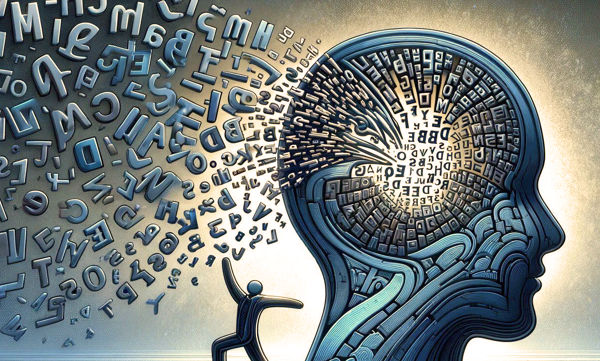
The New Balance Between Speed and Thinking
For decades, productivity was limited by the time required to perform tasks manually. Artificial intelligence has removed many of those limitations.
The current challenge is not working faster. It is working fast without stopping thinking.
Organizations are beginning to discover that AI-assisted productivity does not always mean better decisions.
Speed can increase while judgment quality decreases if critical thinking is reduced.
This makes human judgment an increasingly valuable resource.
The Future of Intellectual Work
Artificial intelligence will continue expanding across all professional sectors. It is likely that more and more mental tasks will be automated.
In this context, the most valuable skills will not necessarily be technical, but cognitive: critical thinking, analytical capacity, and deep understanding.
Professionals who preserve these skills will have a clear advantage over those who depend completely on automated tools.
Artificial intelligence can be an extraordinary amplification of human talent, but only if there is talent to amplify.
The real competition of the future will not be between humans and machines. It will be between people who think and people who only execute results generated by automated systems.
Artificial intelligence is making work faster and more accessible than ever. Ignoring this transformation is not a realistic option for any modern professional.
However, adopting artificial intelligence without judgment also involves risks.
Cognitive erosion does not occur suddenly. It is a gradual process that appears when independent thinking is systematically replaced by automatic solutions.
The challenge is not choosing between human intelligence and artificial intelligence. The challenge is keeping both working together. AI tools can dramatically increase productivity, but independent thinking will remain the most important asset in any professional environment. In the near future, the most valuable professionals will not be those who use the most artificial intelligence, but those who know how to use it without stopping thinking.









 We turn your ideas into reality, creating unique digital experiences. With more than 15 years of knowledge and experience, we design and develop custom websites. We build brands and help them achieve success. We offer a complete service, from design and content creation to social media integration and administration.


