


We live in the era of open tabs. At this very moment, it is highly likely that you have more than ten windows in your browser, three active WhatsApp Web conversations, and an email notification flashing in the corner of your screen. We have been sold the idea that multitasking is an elite skill, a badge of honor for the modern professional. But the reality is much darker: multitasking does not exist. What you are actually doing is destroying your ability to focus and temporarily reducing your IQ.
Neuroscience is clear: the human brain is not designed to process multiple flows of complex information simultaneously. What we call "multitasking" is, in reality, a frantic jump from one task to another that generates brutal cognitive wear and tear. A Stanford University study revealed that people who consider themselves "multitasking masters" are, ironically, the worst at filtering out irrelevant information and the slowest at switching from one task to another. But the true killer of your productivity is an invisible phenomenon called Attention Residue. There is a small 2-minute trick that neuroscientists recommend to reset your brain between tasks, something that could save your workday if you stop scrolling right now...
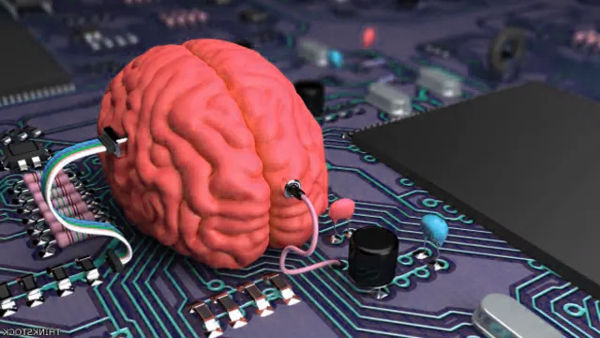
The Great Lie of the Multi-Processor Brain
To understand why you lose 40 percent of your capacity, we must first understand how our central processor works. Imagine your brain is a theater stage where the spotlight of attention can only illuminate one actor at a time. When you try to answer an email while listening to a Zoom meeting, you are not illuminating both; you are moving the spotlight at a violent speed from one side to the other. This movement has a switching cost. Every time the focus moves, you lose milliseconds of processing and a massive amount of glucose energy.
At the end of the day, that exhaustion you feel is not from the work performed, but from your brain's constant effort to refocus over and over again. It’s like trying to drive a car by braking and accelerating sharply every 10 meters; you will reach your destination, but the engine will be wrecked and you will have spent triple the fuel.
Attention Residue: The Silent Enemy
Researcher Sophie Leroy introduced a game-changing concept: Attention Residue. When you move from Task A to Task B, your attention does not follow you immediately. A part of your mind stays "stuck" processing the previous task. If you have just checked a stressful message and close the tab to go back to writing a report, a part of your neurons is still dealing with that message.
This residue makes your performance on Task B mediocre. You are not at 100 percent. You are fragmented. If you do this ten times in an hour, by noon you are working with barely 60 percent of your actual intellectual capacity. It’s like trying to run a marathon with a backpack full of rocks that you pick up at every kilometer.
Why Multitasking Makes You Less Intelligent
A shocking study from the University of London showed that workers distracted by emails and phone calls suffered a 10-point drop in their IQ. To put it in perspective, this is double the effect found after smoking marijuana. Multitasking literally makes you clumsier. It reduces your critical thinking capacity, damages your short-term memory, and increases the likelihood of making stupid mistakes that will later take you even more time to correct.
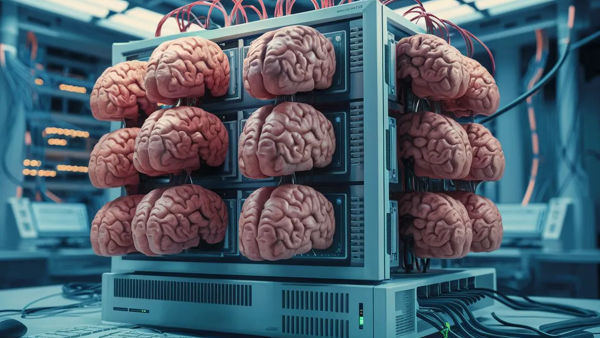
How to Hack Your System to Regain Focus
If you want to recover that 40 percent of lost capacity in 2026, you must start practicing "Mono-tasking." It’s not about working less, but about working with integrity. Here are three validated strategies to clear attention residue and shield your brain:
1. The 2-Minute Transition Rule
Before jumping from one important task to another, stop. Close your eyes for 60 seconds or simply look at a fixed point far from the screen. This small void allows the residue from the previous task to settle and your brain to release the cognitive load. It’s like cleaning the whiteboard before starting to write a new formula.
2. Task Batching
The brain loves patterns. Instead of checking your email every time a notification arrives, establish three moments a day to do it. Grouping similar tasks (answering messages, billing, calls) reduces switching costs because the "focus" doesn't have to change nature, only content.
3. Conscious Closure of Physical and Mental Tabs
When finishing a task, say out loud or write: "I am finished with this." It seems like an insignificant gesture, but it is a neurological signal for your brain to stop dedicating resources to that topic. Physically close the browser tab. Don't leave it there as a pending reminder; if you don't need it now, it’s noise.
The Impact on Your Mental Health: Goodbye to Burnout
Multitasking is one of the fastest routes to chronic exhaustion or burnout. The feeling of being "always on" but never finishing anything generates constant anxiety. The brain interprets fragmented attention as a danger signal, raising cortisol levels. By choosing mono-tasking, you are not only more productive, but you also end the day with more energy for your personal life. You regain control of your time and, above all, your peace of mind.
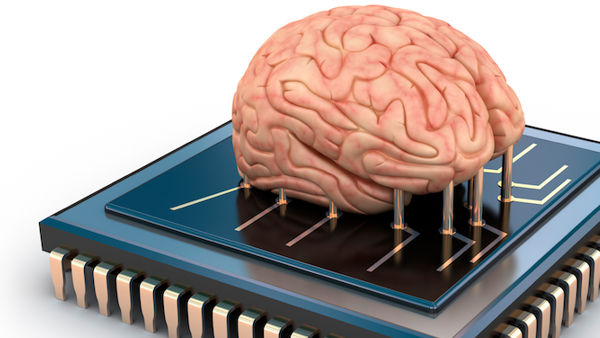
Less is More in the Era of Distraction
In a world that screams at you to do more, the true rebellion is to do one thing at a time, but do it incredibly well. Real productivity is not measured by how many things you started today, but by how many you finished with excellence. If you manage to reduce multitasking, you will be operating at a level that 90 percent of your competition cannot even imagine.
The next time you feel the temptation to open that new tab while you are in the middle of something important, remember: you are not gaining time, you are giving away your intelligence. Focus is the new superpower of 2026. Those who manage to master their attention will master their professional destiny. Are you ready to close the extra tabs and reclaim your brain?









 We turn your ideas into reality, creating unique digital experiences. With more than 15 years of knowledge and experience, we design and develop custom websites. We build brands and help them achieve success. We offer a complete service, from design and content creation to social media integration and administration.


