It is Monday morning. You open your task management app and find a list of 25 pending items. You feel a knot in your stomach. You know, before even starting, that it is physically impossible to finish all of that. Still, you try. You jump from one task to another, put out fires, attend meetings, and at the end of the day, you realize that the most important things remain undone. This is the perfect recipe for burnout and professional mediocrity. But in 2026, the most effective leaders have abandoned the "do more" culture for the "do the right thing" culture.
Analysis paralysis and decision fatigue are the greatest enemies of the knowledge worker today. Having too many options makes us less effective. The 3 Non-Negotiables Rule is not just an organizational method; it is a psychological contract with yourself to protect your energy. It is based on a radical premise: if everything is important, nothing is. In this article, we will break down how this rule can immediately reduce your stress by 50 percent. But beware, there is an emotional trap when choosing your three points that causes most people to fail in the first week...
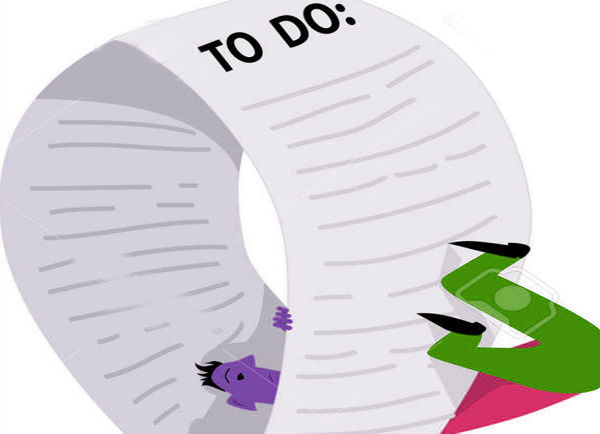
The Problem of the Infinite To-Do List
The human brain seeks dopamine, and nothing gives a faster dopamine hit than crossing easy tasks off a list. The problem is that we usually cross off "junk tasks": replying to an irrelevant email, changing the color of a presentation, or filing documents. At the end of the day, you have crossed off 20 things, but your main project hasn't moved an inch. This creates an illusion of productivity that is, in reality, a sophisticated form of procrastination.
In 2026, the complexity of the digital environment forces us to be ruthless with our time. The infinite to-do list is not an organizational tool; it is a source of constant anxiety that reminds you of everything you are "not doing" while you try to concentrate on what you are doing.
What exactly is the 3 Non-Negotiables Rule?
The rule is simple but brutally effective: every night, before closing your computer, you must choose only three tasks for the next day. These tasks must be those that, if completed, will make the day an absolute success, regardless of everything else that happens. These are your rocks. Everything else (emails, unexpected calls, last-minute requests) is sand.
What makes this rule powerful is the adjective: Non-Negotiable. They are not wishes; they are not "I would like to do this." They are immovable commitments. By limiting your options to three, you eliminate morning decision fatigue. You no longer ask yourself "where do I start?" because the answer was already decided by your strategic self the night before.
How to select your high-impact tasks
Not all tasks are created equal. For this rule to work, your chosen three must meet certain quality criteria. Here we show you how to filter the noise:
1. The "Frog" Criterion (Pareto Principle)
Apply the 80/20 rule. 80 percent of your results come from 20 percent of your efforts. At least one of your three tasks must be that "frog" you'd rather not eat: the most difficult one, the one requiring deep thought, and the one with the greatest long-term impact on your career or business.
2. Differentiating Between Movement and Progress
Movement is being busy; progress is getting closer to the goal. Ask yourself: "If I only did this task today, would I feel proud of my day?". If the answer is no, that task is not a Non-Negotiable; it is simply administrative maintenance.
3. Radical Realism
Do not choose three tasks that each require 12 hours of concentrated work. The goal is to gain confidence by fulfilling the contract. One task can be large (3-4 hours), another medium (1-2 hours), and another small but critical (30 minutes).

The Psychology of the Early Victory
When you use the 3 Non-Negotiables Rule, you change your internal narrative. Instead of ending the day feeling defeated by what remained pending, you end it with a sense of victory because you fulfilled your primary commitments. This psychological boost is cumulative. A professional who strings together 20 days of "victories of three" achieves more than one who tries to do 20 things daily and systematically fails.
Managing the "Sand" (What wasn't in the plan)
Does this mean you are only going to do three things all day? Probably not. Life happens: emails arrive, emergencies crop up. The difference is that now you have a compass. If an interruption appears, you ask yourself: "Is this more important than my 3 Non-Negotiables?". If the answer is no, the interruption waits or is scheduled for after you have finished your three rocks.
The 3 Non-Negotiables Rule gives you the mental permission to say "no" or "not now" without feeling guilt, because you have a clear priority to defend.

Implementation in 2026: Tools and Rituals
For this technique to go viral in your own life, you need a ritual. Do not hide it in a complex app full of notifications. Write it on a physical post-it or a simple note on your desk. The act of writing by hand reinforces the neurological commitment.
Many high-performance teams at Neobox and other tech companies are adopting this in their daily meetings. Instead of stating everything they are going to do, they only share their 3 Non-Negotiables. This creates a culture of accountability and laser focus that is enviable.
Reclaim Command of Your Life
Minimalist productivity is not about doing less out of laziness, but about doing less to achieve more. In a world saturated with information and constant demands, the ability to choose three things and ignore the rest is a superpower. By adopting the 3 Non-Negotiables Rule, you stop being a passenger in your own schedule and become the captain.
Remember: the quality of your professional life is determined by the quality of your priorities. Do not let the noise of others decide what is important to you. Choose your three battles for tomorrow and prepare to experience a clarity you haven't felt in years. What three things will you choose today to dominate your tomorrow?