Have you ever heard about Web3 and felt like all your tech friends or colleagues were speaking a secret language? You are not alone. Terms like Blockchain, NFTs, and decentralization sound like something pulled straight from a sci-fi movie, but they are actually the pieces assembling the internet of tomorrow.
If you are a beginner, someone who just uses the internet to watch cat videos or look up recipes (like those from Club de Cocina, wink, wink), this guide is for you. We are going to break down these concepts so that, by the end, you not only understand them but can explain them to anyone.
The secret to understanding Web3 is simple: stop seeing it as just a technology and start seeing it as a shift in power.
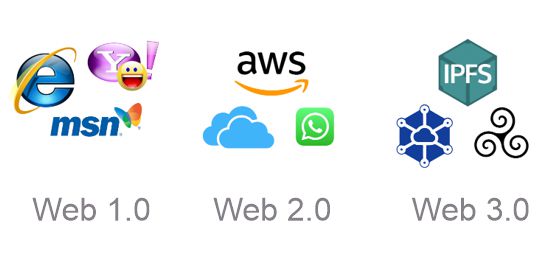
From Web 1.0 to Web 2.0: The Story of a Power Shift
To understand where we are going, we first need to see where we came from. The internet we use today is not the first version; it's the second.
Web 1.0: The Directory (Read-Only)
Imagine the internet in the late 90s. It was like a gigantic library directory. It was full of static web pages, with lots of text and few graphics. The user was a simple spectator. You could read information (view a page), but you couldn't easily interact, create, or upload content. It was a world of reading.
Web 2.0: The Social Network (Read and Write)
This is the web we all know and love (or hate). It was born with the arrival of social networks, interactive blogs, and smartphones. Suddenly, you could read content and also write it.
You upload your vacation photo to Instagram. You write a comment on YouTube. You send an email via Gmail. All that content was created by you, but here is the crucial detail: it doesn't belong to you.
In Web 2.0, your content, your data, and your digital identity are stored on central servers controlled by a few giant corporations (Google, Meta, Amazon, etc.). If Instagram decides to close your account, you lose everything. If Facebook sells your browsing data to an advertiser, you can't do anything about it. It is a centralized web where power resides in corporations.
Web 3.0: The Era of Ownership (Read, Write, and Own)
This is where the future comes in. Web3 is a simple yet powerful idea: what if, instead of a large company owning all the data and services, ownership and control were distributed among all users?
Web3 is, essentially, the decentralized web. Instead of having to trust a bank, Facebook, or a government to validate a transaction or save your identity, you trust a software that we can all see and audit.
The key concept is digital ownership. What you create, what you buy, and what you define as your digital identity in Web3, belongs to you and is securely registered.
The Heart of Web3: Understanding the Blockchain
How do we go from centralization (Web 2.0) to decentralization (Web3)? The answer is Blockchain technology.
Imagine a giant ledger, a public record where absolutely everything that happens is recorded. The particularity is that this book is not in a bank's vault, but thousands of computers worldwide have an identical copy.
Every time a new transaction or event occurs (like the purchase of a digital asset), the information is grouped into a block. Once this block is validated by a majority of the computers that have the ledger (the "nodes"), it is sealed with a cryptographic code and added to the chain of previous blocks.
Why is it Revolutionary?
- Immutable: Once a block is added to the chain, it is virtually impossible to modify. If someone tried to change a piece of data, that copy would no longer match the thousands of copies that everyone else has. This generates trust that does not depend on a central authority.
- Transparency: Everyone can see what is registered. Transactions are public (although the owners' identities remain pseudonymous).
- Security: It is protected by complex cryptography, which makes it extremely robust against attacks.
Blockchain is not just for money; it is a system for saving any kind of valuable information or digital property, and that is the foundation of Web3.
The Web3 Ecosystem: Terms You Need to Know
Web3 is more than just the Blockchain. It is a whole ecosystem of applications and assets that are built on top of it. Here is a simple breakdown of the most common terms you will hear.
1. NFTs (Non-Fungible Tokens)
If Web3 is about digital ownership, the NFT is the deed of ownership.
- Fungible means something is interchangeable with another identical unit (a 10-dollar bill is the same as any other 10-dollar bill).
- Non-Fungible means something is unique and cannot be replicated.
An NFT is a unique digital certificate that is stored on the Blockchain and proves that you are the original owner of a specific digital asset (it can be a piece of art, a piece of music, or even a ticket to an event). Although anyone can right-click and save the image, only the owner of the NFT possesses the unique, irrefutable "deed" that validates it.
2. Cryptocurrencies
Many people think that cryptocurrencies (like Bitcoin or Ethereum) are just a form of investment, but in the Web3 world, their function is much deeper.
Cryptocurrencies act as the fuel for these new decentralized networks. They are not only a means of payment, but they:
- Incentivize: They reward the people (miners or validators) who dedicate their computing power to keeping the ledger (the Blockchain) secure and running.
- Allow Commerce: They are the native currency for buying and selling NFTs and accessing the services of decentralized applications.
3. DApps (Decentralized Applications)
They are like the apps on your phone, but they are not controlled by a single company; instead, they operate on the Blockchain (in a decentralized way).
In Web 2.0, you use Uber (a centralized company) to call a car. In Web3, you would use a DApp (a network of drivers and users) where the rules are written into the Blockchain code, and no one can change them unilaterally.
4. DAOs (Decentralized Autonomous Organizations)
Imagine a digital club that doesn't have a president or a board of directors, but is governed by its own members. That is a DAO.
In a DAO, the rules and decisions are made through member votes, and those votes are executed automatically through immutable code on the Blockchain. If you own a token or cryptocurrency of a DAO, you have the right to vote on the future of that organization. It is a democratic and transparent governance model for the digital age.
Why Should You Care About Web3?
As a beginner, you might think, "This all sounds very complicated, why can't I just stick to Facebook?"
The answer is that Web3 seeks not just to change how we use social networks, but to change the way value is created and distributed on the internet.
For you, as a user and potential creator, this means:
- More Control: If you create something, it is yours. You don't have to ask a corporation for permission to publish it or monetize it.
- New Opportunities: You can participate in the creation of new projects (DAOs), earn money directly without intermediaries (DApps), and own digital assets that you can truly sell, without being blocked.
- Transparency: You can see the rules of the game. If a service uses open source code on the Blockchain, you can be sure that it does what it says it does.
Web3 is the step toward an internet where users are not the product (as in Web 2.0), but are the owners and builders. You don't need to be an expert programmer, just a curious user who is willing to understand the basis of this new world. The technology is complex, yes, but the idea is simple: it is your internet.