It is one of the most widely accepted lies in the professional world: "I just need to hold on until vacation to recover." We work 50-hour weeks, accumulating cognitive fatigue and stress under the false promise that two weeks on the beach will erase months of exhaustion. However, the science of 2026 is devastating: the well-being effect of a long vacation disappears, on average, two weeks after returning to the office. The true secret of high-performance professionals is not annual rest, but ultra-fast recovery through micro-breaks.
Our brain is not a machine of endurance, but an organ of pulses. It functions best in high-intensity bursts followed by brief periods of disconnection. The problem is that most of us "rest" incorrectly. If during your five-minute break you open Instagram or check the news, you are not resting; you are subjecting your brain to an even greater load of visual and emotional processing. There is a 60-second recovery technique called "Relaxed Vigilance" that can instantly reduce your cortisol levels, but almost no one applies it correctly because we have been taught that sitting still is a waste of time...
The Fallacy of Vacations as a Cure for Burnout
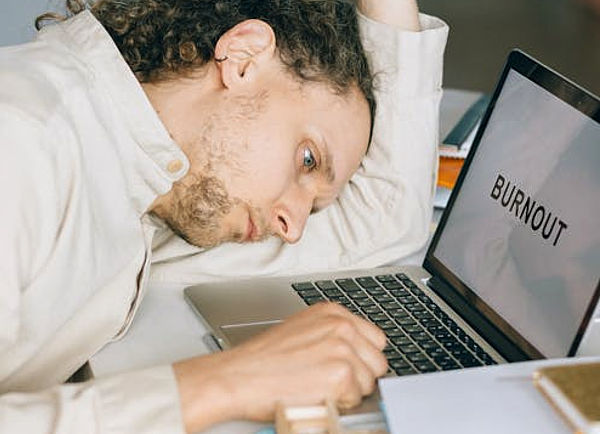
Vacations are necessary for vital disconnection, but they are ineffective for managing daily fatigue. Burnout does not happen due to a lack of vacations, but due to the accumulation of micro-stressors that are never released. When we wait months to rest, the damage to our nervous system is already deep. In 2026, neuroscience has shown that strategic micro-breaks keep the energy baseline stable, avoiding the exhaustion peaks that make us irritable and uncreative.
Think of it like your phone's battery. It is much healthier for the system to keep it between 20 percent and 80 percent with small charges than to let it die completely and then attempt a frustrating fast charge.
What is an Effective Micro-break?
A micro-break is not "stopping work." It is radically changing the type of stimulus the brain receives. For a 5-minute break to be regenerative, it must follow the rule of sensory disconnection. If you work in front of a screen (visual and cognitive stimulus), your break must be physical or auditory. Here is the science behind ultra-fast recovery:
1. The Power of Natural Light and Distant Vision
Staring at a screen keeps your ciliary muscles tense. Looking out the window at a distant point for one minute sends an immediate relaxation signal to the autonomic nervous system. In 2026, the most advanced offices at Neobox and other tech companies are designed to force this "long gaze" every hour.
2. Somatic Movement vs. Exercise
You don't need to go to the gym in the middle of the day. A 2-minute micro-break of conscious stretching or simply walking around the room oxygenates the blood and helps eliminate adenosine residue in the brain, which is what makes you feel mentally "cloudy."
3. Box Breathing
Used by Navy SEALs to maintain calm in combat, this 60-second technique resets your heart rate. Inhale for 4 counts, hold for 4, exhale for 4, and hold empty for 4. It is the fastest way to tell your brain that you are not in danger and that it can return to creative thinking mode.

The "Digital False Pause" Error
This is where 90 percent of professionals fail. If your break involves looking at another screen (your smartphone), your brain continues to process information, cheap dopamine, and blue light. There is no recovery. In fact, recent studies show that digital breaks increase visual exhaustion by 15 percent. True rest requires boredom. Yes, letting the mind wander without a fixed goal is what allows the "Default Mode Network" to activate, which is where the best ideas are born.
Implementation in 2026: The Rhythm of Champions
In high-performance companies, the micro-break is not frowned upon; it is a metric of efficiency. If someone is seen staring into space for 5 minutes, it is understood that they are optimizing their next block of deep work. Don't wait until you feel tired to stop; stop while you still have energy. That is the key to reaching the end of the week with the same lucidity you started with.
Your Brain Will Thank You
In the attention economy of 2026, your recovery capacity is your greatest competitive advantage. Stop glorifying tiredness and start valuing your mental freshness. Vacations are for enjoying life; micro-breaks are for mastering your profession.
Remember: you are not a robot designed for linear production. You are a biological system that needs cycles. Start today: set an alarm every 50 minutes, stand up, look far away, and breathe. You will be surprised at what those 5 minutes can do for the rest of your life. Are you going to keep waiting for summer to breathe again?